All about Accessory Dwelling Units
An accessory dwelling unit (ADU) is a smaller home that shares the same residential lot with a larger home. Communities are allowing ADUs as a gentle way of adding new housing options with existing neighborhoods.

In an attic
Above a detached garage
In the
back yard
As an addition
Above an
attached garage
In a basement
You can add an accessory dwelling unit to an existing home in many different ways, making them a uniquely flexible housing option.
Watch Two Houses, One Home to see an ADU being built from start to finish
We joined local non-profit HOME, Inc. to follow their construction of an accessory dwelling unit in the Oak Park neighborhood from start to finish. Each episode features an update from the project site as well as an interview with a local housing expert.
Two Houses, One Home is hosted by Kourtney Kirkpatrick of HOME, Inc.

Designing an Accessory Dwelling Unit (ADU) in Des Moines, Iowa

We're Building an Accessory Dwelling Unit (ADU) in Des Moines, Iowa!
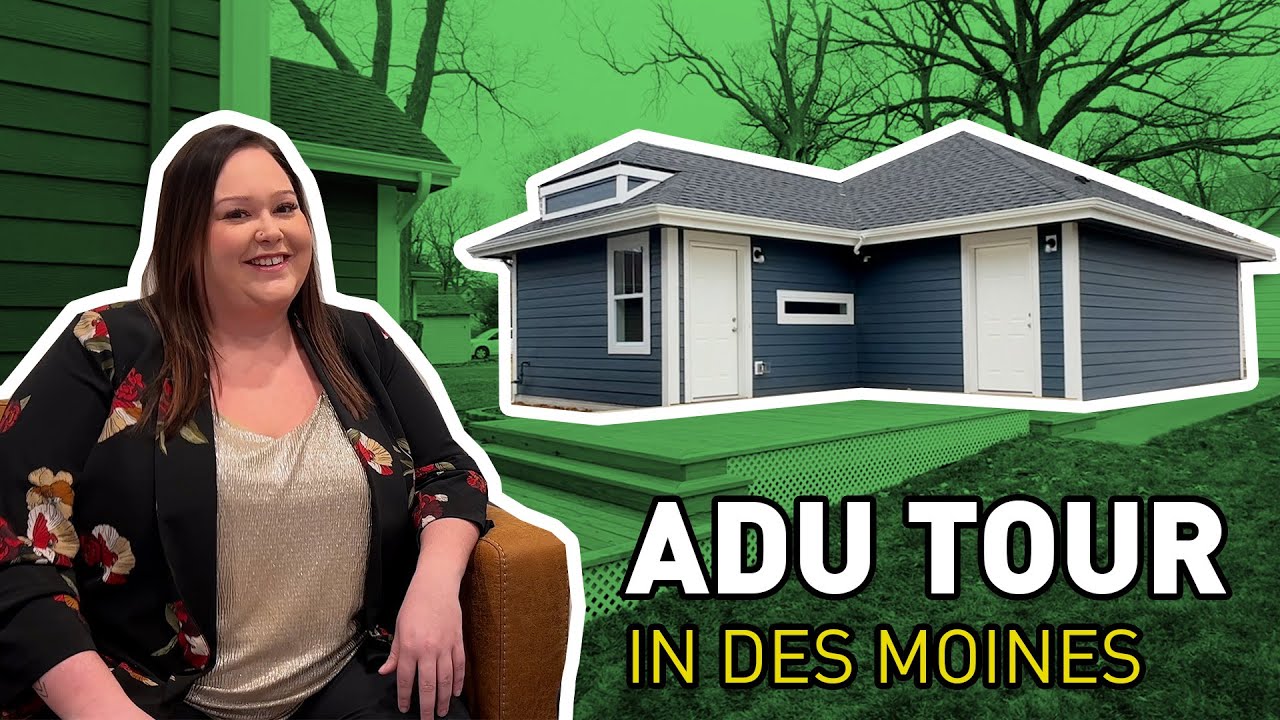
Check out our new Accessory Dwelling Unit (ADU) in Des Moines, Iowa

A new Accessory Dwelling Unit in Des Moines, Iowa - Just the reveal!
Benefits of Accessory Dwelling units
-
Provide a more affordable housing option.
-
Integrate additional housing into a neighborhood with minimal impact (gentle density).
-
Make efficient use of existing infrastructure.
-
Increase property values and tax revenue.
-
Reduce urban sprawl.
-
Generate income for homeowners.
-
Support multi-generational households.
Commonly asked questions about ADUs
Who are ADUs for?
ADUs provide a flexible housing option that can evolve with families through all phases of life. Homeowners can rent them for additional income. They could be a place for an adult child to live after college. Or for an aging parent to live independently in retirement-the options go on from there.
Can I build an ADU?
Your local government's zoning policy typically determines whether you can build an ADU at your property and what the requirements are for doing so.
While multiple Greater Des Moines communities allow ADUs in some form, their policies can vary widely. It's always best to contact your city's community development or building permitting officials to ask about policies near you.
Are ADUs really "affordable housing"?
ADUs can cost between $50,000 and $150,000+ to add to a house, and they may rent at prices that are beyond the reach of people struggling most to afford the place they live. But ADUs do provide a new housing option that matches well with existing neighborhoods where it might otherwise be difficult to build.
Another benefit of ADUs is the land they sit on is already paid for - and they make good use of existing community infrastructure like roads, utilities, parks and more while providing a housing option many neighbors may never even notice.
Local contacts
Here's who to call for ADU information in several Central Iowa communities.
Altoona: John Shaw, Community Development Director, 515-957-5114
Ankeny: Community Development Department; 515-963-3550
Clive: Community Development Department, 515-223-6221
Des Moines: Zoning Enforcement Division, DZ@dmgov.org, 515-283-4207
Indianola: Community Development Department, 515-961-9430
Johnston: Community Development Department, 515-727-7778
Norwalk: Community Development Department; 515-981-9530
Pleasant Hill: Madeline Sturms, Assistant City Mgr., 515-309-9464
Polk County*: Public Works Department; e-mail publicworks@
polkcountyiowa.gov
Urbandale: Community Development Dept.; 515-278-3935
Waukee: Community Development Department; 515-978-9533
West Des Moines: Linda Schemmel, Development Coordinator, 515-222-3620
Is your city not listed? Contact City Hall and ask to speak with the community development department or someone who handles building permitting issues.